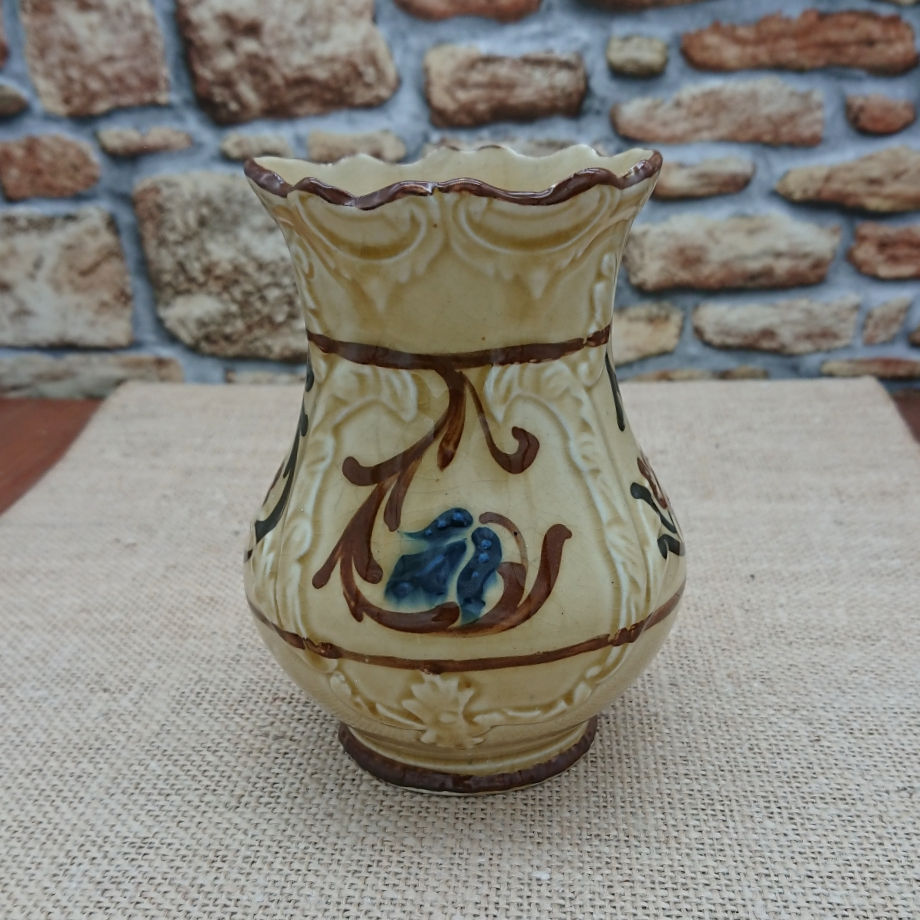
The cups and saucers were produced using the technique known as barbotine on the continent (similar to English slip-casting) which involves using liquid slip in moulds to form the shapes and decoration.
The Wasmuël pottery factory was built by Isidore Paulus in 1834, to produce white-glazed utility earthenware for sanitary use. In the 1850s Paulus expanded his range to include new majolica glazed decorative pieces. His successors, Jean-Pierre Mouzin and his son, Auguste Mouzin, expanded the pottery, with the Wasmuël factory reaching the height of its success from the late 1870s to around 1905, producing decorative majolica ware, including asparagus and oyster plates, plant holders, oil lamp bases and other novelty items, much of it in a subdued palette which appealed to the British and French markets' tastes for the Aesthetic Movement colours. In 1886, a new partnership known as AMC or Auguste Mouzin et Cie, took over the pottery, continuing until 1951.
Each cup:
Each saucer:
Height approx. 1.5cm
Diameter approx. 14cm